
How Much Can You Really Earn from Airbnb in Melbourne or Perth? Is it worth it?
Can Airbnb Still Make You Money in 2025? See Real Returns from Melbourne & Perth Investors
 Josh Tay
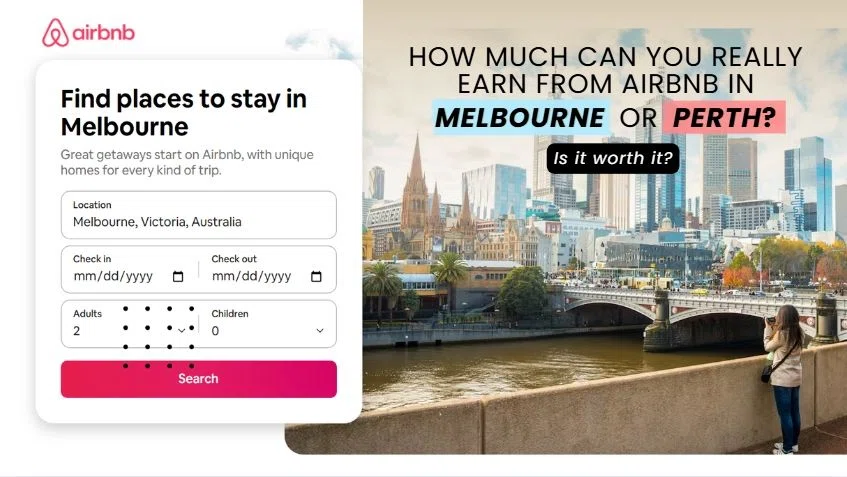
If you could double your rent from the same property — would you?
That’s the dream Airbnb sells. A few clicks, a few guests, and suddenly you’re earning what long-term landlords can only dream of.
But behind every five-star review are cleaning costs, management headaches, and nights when no one books.
After 18 years helping investors from Singapore, Hong Kong, and beyond, I’ve seen both sides — the hosts who thrived, and the ones who quietly gave up.
So can Airbnb in Melbourne or Perth really deliver the income it promises?
Why Everyone’s Talking About Airbnb Again
With interest rates still high and long-term yields squeezed, short-stays are back in fashion. Tourism rebounded, domestic travel is strong, and events keep rooms full.
AirDNA (Oct 2025) reports:
- 330 000+ active Australian listings (+9% YoY)
- National ADR $209 (+7.5%)
- Average occupancy = 71%
Great numbers — but each city tells a very different story.
Melbourne vs Perth: Same Country, Opposite Outcomes
| Metric (2025) | Melbourne | Perth |
| Average Daily Rate | $218 | $187 |
| Occupancy | 65% | 79% |
| Gross Airbnb Yield | 5.4% | 7.6% |
| Regulation | Strict (180-day cap) | Light (registration only) |
| Typical Long-Term Yield | 4.1% | 5.4% |
| Management Cost | 20-25% | 15-20% |
Short- Stay Snapshot: Melbourne VS Perth
Melbourne
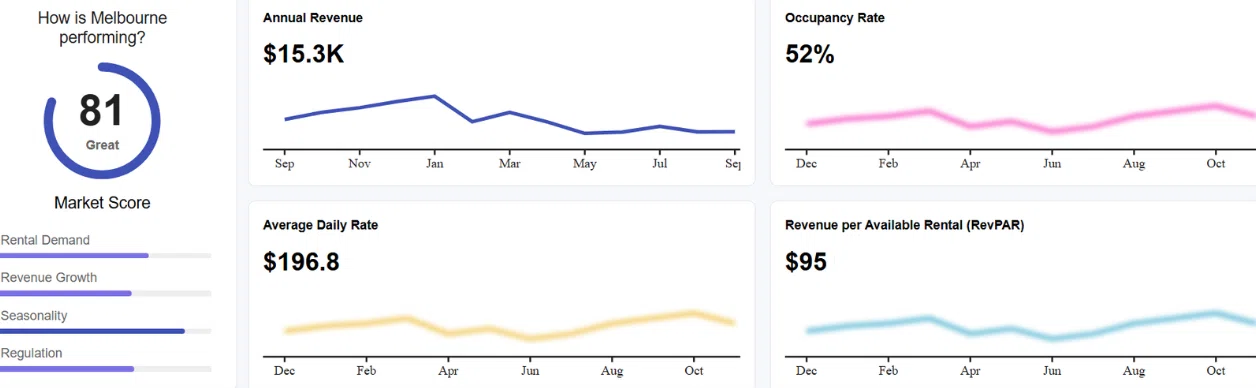
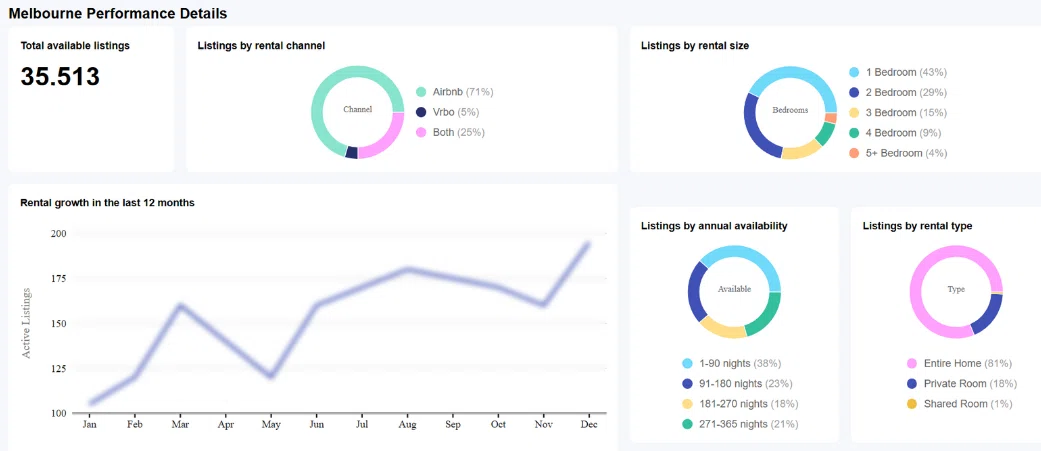
AirDNA’s Melbourne market overview shows (public snapshot data): average occupancy 52%, average daily rate (ADR) = A$197, and RevPAR = A$52 for the aggregated short-stay stock in Melbourne.
These are city-wide figures — inner-city micro-markets (Southbank, Docklands, Carlton) can have higher ADRs and different occupancy.
Perth
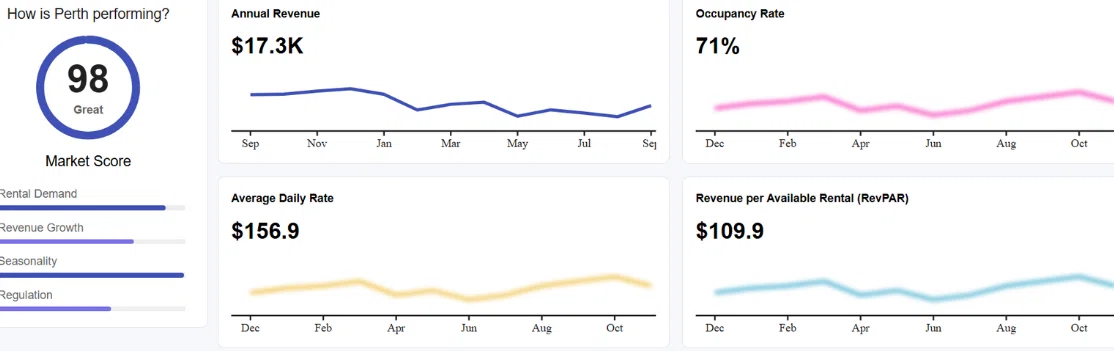
AirDNA’s Perth overview shows higher occupancy — around 70–71% in some AirDNA samples — and an ADR often in the A$150–A$170 band (AirDNA snapshots vary by sample size). A conservative city-level indicator from AirDNA suggests occupancy 71% and ADR = A$157, producing stronger gross revenue vs Melbourne on average.
Another AirDNA sample set shows variation (some submarkets show lower occupancy but higher ADR), which is normal.
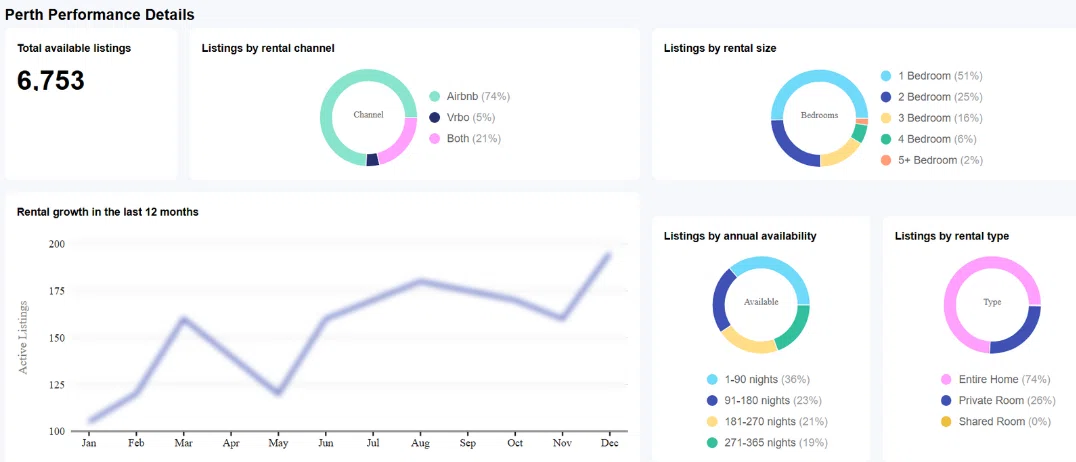
Case Study 1: Perth CBD Apartment Purchase Price: $670,000 Nightly Rate: $190 | Occupancy: 78% (285 nights) Gross Income: $54 000 / yr After 20% management, $4,000 cleaning, $3 000 utilities → Net = $40 000 (5.9 %) Long-term rent $700/w = $36,400 / yr. - Airbnb wins by = 10%, plus owner flexibility. | Case Study 2: Melbourne Southbank Apartment Purchase Price: $720,000 Nightly Rate: $225 | Occupancy: 64% (234 nights) Gross Income: $52,000 / yr After 22% management, $4,200 cleaning, $3 500 utilities → Net = $34 000 (4.7 %) Comparable long-term rent $700/w = $36 400 / yr. - Barely ahead, and subject to Melbourne’s 180-day cap. |
WA’s lighter regulations keep investors smiling. The 2024 registration scheme focuses on safety — not restrictions — unlike Victoria’s tightening rules.
Tourism WA says visitor numbers are +18% YoY, and hotel occupancy hit 84% in peak months. That leaves room for quality short-stays.
FIFO workers, med staff, and relocating corporates now book Airbnbs for mid-term stays — a steady, lucrative niche.
The Costs Everyone Forgets
| Expense | Typical Cost | Comment | |
| Management Fee | 15-30% of booking revenue for full service | Pricing, calendars, guest support | |
| Cleaning & laundry | $120-160 per turnover | Depending on property size and standards | |
| Utilities & Supplies | $250-300/mo | Wi-Fi, electricity, water, consumables — these are usually landlord costs on short-stay. | |
| Vacancy | 20-25% typical | Even in strong areas | |
| Furniture Depreciation | 5-10% / year | Tax-deductible | |
| Council Rules | Melb 180-day cap | Check strata by-laws |
Insurance: Short-stay insurance can be more expensive; make sure you have host insurance that covers short-term letting.
Taxation & reporting: Short-stay income must be declared. Also consider GST thresholds for providers and local levies.
Regulatory compliance & levies: See next section — these can materially change a deal’s viability.
Profit looks smaller after this reality check.
Regulation: Victoria vs Western Australia
Victoria moved to introduce statewide measures in 2024–25:
- A 7.5% short-stay accommodation levy (announced for January 1, 2025) applies to platforms (Airbnb/Stayz) to raise funds for housing. Local councils and owners corporations were also given stronger powers to cap or ban short-stay in certain areas.
| Investor takeaway: In Melbourne, compliance and local council rules now matter as much as occupancy and ADR. Many apartment blocks and some suburbs face effective day-caps or practical bans. You must check owners-corp rules and council planning before budgeting on short-stay revenue. |
Western Australia has taken a different approach in 2025:
- WA implemented a Short-Term Rental Accommodation (STRA) Register and position statement to standardise registration and improve local oversight — providers must register properties and meet standards. The register (May 2025 onward) aims to balance tourism benefits with community impacts.
| Investor takeaway: WA’s approach leans to regulated enablement — registration, transparency and compliance rather than blanket caps. This makes Perth comparatively more predictable for professional operators — but you must register, comply with local rules, and budget for compliance obligations. |
Where short-stay still works (suburb micro-markets and property types)
| City | Suburb | Why It Works | Gross Yield |
| Perth | Mandurah | Waterfront & holiday demand | 8.1% |
| Perth | Scarborough | Beach + few rules | 7.4 |
- Coastal holiday suburbs & beachside pockets (Scarborough, Cottesloe fringe in high season) — tourism seasonality is predictable and occupancy is high.
- Inner suburbs with short commutes to CBD (Mount Lawley, Inglewood) — good year-round demand from business travellers and short-term corporate placements.
- Regional escapes within WA — increasing searches for regional stays have pushed up short-stay demand in lifestyle regions around Perth.
| City | Suburb | Why It Works | Gross Yield |
| Melbourne | St. Kilda | Tourism + local vibe | 6.1% |
| Melbourne | Docklands | Event traffic boosts bookings | 5.5% |
(AirDNA & PropTrack Oct 2025)
- Premium terraces / whole houses near hospitals/universities (e.g., Carlton, Parkville area): consistent demand from visiting academics and families. Check owners-corp rules if you’re buying a smaller apartment.
- Boutique stays in lifestyle precincts (St Kilda, South Yarra) — strong weekend tourism & events demand. Beware owners-corp rules in newer towers.
- Short-stay in non-apartment, single-house stock (inner suburbs with detached homes) — tends to face fewer owners-corp restrictions.
Airbnb vs Long-Term Rent: Side-by-Side
| Factor | Airbnb | Long-Term |
| Yield Potential | 5-8% | 3.5-5.5% |
| Vacancy Risk | Medium-High | Low |
| Management Cost | High (20-25%) | Low (8-10%) |
| Regulation | Growing | Minimal |
| Flexibility | High | Low |
| Passive Ease | Lower | Higher |
Airbnb can outperform only when managed tightly — it’s not a “set and forget.”
The Truth No One Tells You
If you want a stable cash flow, go long-term.
If you want higher yield and can handle the work, short-stay can shine.
I’ve seen clients thrive with Airbnb — and others regret it after 3 months. The winners all did three things right:
1. Picked the right suburb (tourism + domestic demand)
2. Hired professional management
3. Treated it like a business, not a side hobby
So… Is Airbnb Worth It in 2025?
Yes — well-managed listings can hit 7–8 % net yields. It really depends on location and cap rules. Short-stays aren’t dead — they’ve just matured. The winners are those who understand regulation, yield, and occupancy math.
Let’s Talk
If you’re ready to see which properties in Melbourne or Perth can genuinely perform on Airbnb, reach out to me now!
I’ll walk you through the numbers and help you invest where the returns are real.
