
Melbourne Just Broke a $131M Property Record
If you’re a foreign buyer, this $131M sale wasn’t for you, but its impact is.
 Josh Tay
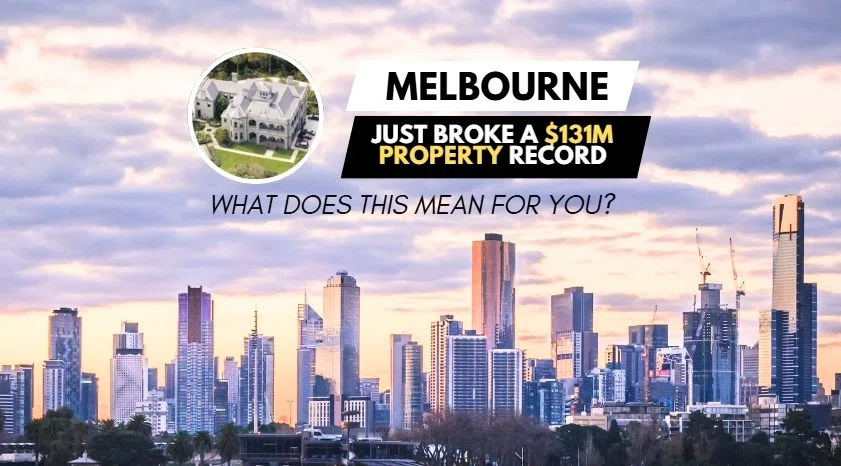
Melbourne has just toppled Sydney to secure Australia’s most expensive residential sale of 2025, a jaw-dropping $131 million-plus trophy estate in Toorak.
Can you imagine that? The city investors thought was slowing down is now the country’s ultra-luxury capital.
But here’s the twist: foreign investors aren’t allowed to buy established homes anymore.
So if you’re reading this from Singapore or overseas and thinking “I can’t buy that house — so what’s in it for me?” — you’re asking the right question.
What Changed in 2025: The Foreign Buyer Rule Every Investor Needs to Know
Earlier this year, the Australian Government introduced a temporary ban on foreign purchases of established (existing) dwellings that runs from 1 April 2025 to 31 March 2027. Foreign buyers, including foreign companies and temporary residents, cannot apply to buy established homes unless one of very limited exceptions applies (such as redeveloping land into new housing).
That means
❌ You cannot buy an existing house, strata apartment, townhouse, or resale property in Melbourne right now.
✔ You can buy new dwellings and off-the-plan properties with FIRB approval because those increase housing supply, which is one goal of the policy.
This rule fundamentally changes access for foreign capital. But rather than seeing this as just a restriction, you should see it as a strategic shift in how overseas buyers must position themselves.

So Why Does a $131M Sale Matter If You Can’t Touch It?
Because big money leads, price momentum follows.
A $131 million sale isn’t selling because people feel optimistic. It sells because very wealthy buyers — often global capital allocators — believe the risk-reward is now favourable. In other words, the elite tier of money sees value where others see uncertainty.
And that matters, because:
- Record luxury sales don’t exist in isolation; they reprice the *market from the top down.
- Replacement costs for land and construction go up.
- Developers reset pricing expectations for new projects.
This is exactly what has been happening in Melbourne, and why the “off-the-plan” segment is more strategically positioned right now than almost any other.

Foreign Buyers Today Are Forced to Buy Different, and That’s Not a Bad Thing
If you cannot compete in the resale market, your focus must be on:
1. Off-The-Plan Properties
These are units, townhouses, or new builds that haven’t been completed yet, essentially futures of housing stock. Because they add new supply, foreign investors are permitted to buy them with FIRB approval.
2. Vacant Land for Development
You can buy vacant land with the condition of building on it, although the development must be completed within a set timeframe.
These aren’t compromises; they are the only legal way you can participate, and getting in early here can be advantageous.

Data You Need to Know Now (Not Later)
Here’s what the market data says as of late 2025:
1. Melbourne price growth is actually running hotter than many expect
Analysts (like ANZ) revised forecasts calling for 6.6% growth in Melbourne home values in 2026, higher than most other capitals, while Westpac has even projected near double-digit growth.
That’s a meaningful rebound from the sluggish years of 2023–24.
2. Consumer sentiment is improving
The Westpac-Melbourne Institute Consumer Sentiment Index rose above 100, meaning optimism outweighs pessimism for the first time since early 2022. This matters because confidence often leads price movement.
3. With new supply constrained, rents continue to tighten
Vacancy rates in many inner and middle-ring Melbourne suburbs remain low, adding rental growth pressure that boosts investor yields for the right type of product.

Melbourne’s 1-Year Stamp Duty Window: A Massive Bonus (Linked to Opportunity)
Here’s where your opportunity becomes very real, even with the ban.
Victoria introduced a stamp duty concession window that runs through 2026, offering significant savings on off-the-plan purchases — sometimes in excess of six figures, depending on the project and price range.
That means if you move now and secure an off-the-plan unit, you can:
✔ Pay significantly less upfront duty than you would next year
✔ Boost your overall investment return
✔ Position ahead of expected 2026 price growth
This is the exact type of strategic win that separates smart global buyers from the rest.
For deeper detail, you can read more about this in the article “Melbourne’s 1-Year Stamp Duty Window: How Global Investors Can Save Big in 2026.”

Why Waiting Could Cost You — Even More Than You Think
You might be thinking:
“If I wait until the ban lifts in 2027, I can buy whatever I want.”
Here’s the uncomfortable truth:
1. The best projects and best prices always get snapped up first.
2. Stamp duty incentives will likely reduce or expire after 2026.
3. Price growth is already forecast to continue into 2026 and beyond.
4. Supply is tightening — not loosening.
When the restrictions end, competition will be fiercer, prices will be higher, and entry points fewer.
That’s exactly what happened in other cities that introduced temporary restrictions previously: By the time buyers feel “safe”, the opportunity has passed.

So… What Should You Do Now
1. Look at Off-The-Plan with Stamp Duty Savings in Mind
This is the sweet spot right now: guaranteed legal access plus government-backed tax savings through 2026.
2. Target High-Demand Precincts
Not all new buildings perform the same. Suburbs with strong rental markets and tight vacancies, inner rings, and well-connected growth corridors, will outperform.
3. Don’t Overlook Rental Yield
Even if your horizon is capital growth, rental income today matters more when supply is tight and rents are rising.
4. Position Before Herd Behaviour Returns
History shows markets don’t look attractive before they run, they look attractive after. Acting now lets you buy before sentiment shifts from “wait and see” to “FOMO”.

The Sale is Not the Destination — It’s the Signal. Act Now!
Global capital is warming to Melbourne again.
Stamp duty incentives make new homes cheaper to secure today than they will be tomorrow.
Foreign buyers, while restricted from existing homes for now, still have a clear legal path to property ownership and growth.
The question isn’t: “Can I buy that $131 million house?”
It’s “Will you position yourself before the opportunity feels comfortable or after it’s already priced in?
Melbourne is staging a strategic comeback.
And smart investors who understand how to enter legally, efficiently, and early stand to benefit most.
Let's connect now!
