
Key takeaways
- The 2026 forecast of 6–8% national growth has not held for Melbourne — values were down 1.2% year-on-year and 3.3% over the June 2026 quarter.
- National averages are being carried by Brisbane and Perth, which is exactly the divergence the article flagged as a risk.
- Melbourne's median house value sat near A$948,000 in June 2026, against a forecast trajectory that implied considerably more.
- The three risks named — oversupply in some precincts, rate movements and settlement valuation — all proved more relevant than the growth number.
- Rates moved against the forecast too: the cash rate is 4.35% as at July 2026 after three increases, with cuts not expected before 2027.
If you’re a savvy Singaporean or global investor looking for your next property move, this article is your inside guide to Australia’s property market forecast for 2026.
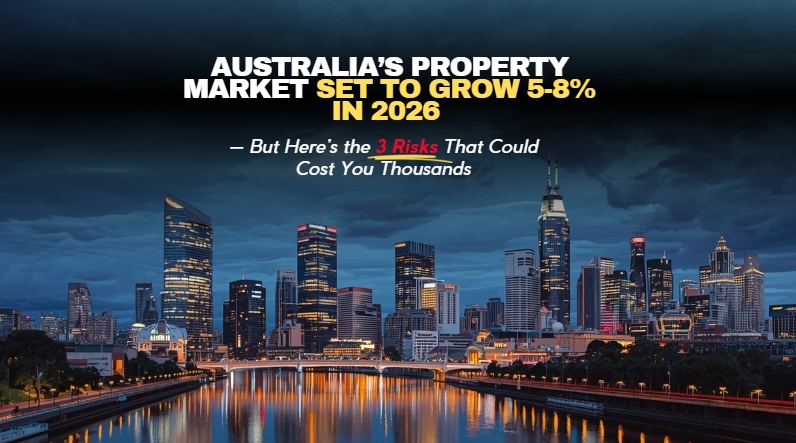
Market forecasts suggest national property prices could rise in 2026, with some cities outperforming others. But like any market, this growth comes with risks that could quietly drain your profits if you’re not prepared.
Let me walk you through everything you need to know.
Australia’s Property Market in 2026: Why Investors Are Optimistic
Let’s get straight to the good news.
The Australian property market has shaken off some of the uncertainties of recent years and is gearing up for a solid year ahead, driven by ongoing demand, limited housing supply, and steady population gains.
- National home prices may rise around 6–8% in 2026, following an 8.6% gain in 2025. Half-year check, July 2026: this has not held for Melbourne. CoreLogic recorded Melbourne house values down 1.2% year-on-year and 3.3% over the June quarter, median near A$948,000. The national average is being carried by Brisbane and Perth. If Melbourne is your market, the forecast below is not describing it — the strongest annual increase in years.
- Sydney, Australia’s biggest market, may see 5–7% growth with median values staying well above A$1.2M.
- Brisbane and Perth — markets once dismissed as “second tier” — could be among the strongest performers, with some forecasts above 7–10%.
- Units and apartments, especially in tight rental markets, are also trending upwards.
If you’re thinking, “Sounds great, but how do I know this applies to me?”
Here’s the bottom line: Whether you’re looking for a family home, a retirement haven, or an investment to generate passive rental income, this market environment favors you.
But, and this is important, growth is not guaranteed for every property or suburb.
To avoid costly mistakes, you must understand the 3 crucial risks that could derail your gains.
Risk #1 — Interest Rates Are Now the Market’s Wild Card
Last year, the Reserve Bank of Australia (RBA) cut the cash rate a few times, pushing the official rate down to 3.6%, the lowest since early 2023.
But now, here's the warning: While inflation has eased, reducing the immediate chance of a rate hike, uncertainty remains. Markets still price the possibility of a future increase in 2026.
What does that mean for you?
If the RBA hikes even once this year, your borrowing costs could jump sharply, reducing:
- your borrowing power,
- cash flow, and
- your overall return on investment.
Even a 0.25–0.50% hike could wipe thousands off your monthly return, especially if your strategy relies on rental yields and leverage.
Most investors hear “prices up 7%” and forget the real cost of money. That’s a fast way to overpay or get squeezed.
| My insight: Don’t just focus on property price growth; consider how rising mortgage costs affect your net profits. Plan for “stress testing” your finances at higher rates to ensure you can weather future increases without panic selling. |
Risk #2 — Not All Growth Is Equal — Sydney/Melbourne vs Everywhere Else
The headlines talk about big numbers. But let’s look closer.
- Sydney and Melbourne will grow, yes, but forecasts show slower price momentum relative to smaller capitals and regional markets.
The reasons?
Affordability pressures, tighter lending rules, and the “wait and see” attitude of some buyers.
- Meanwhile, cities like Brisbane, Adelaide, Perth, and even regional VIC and NSW towns are seeing stronger demand and potentially higher growth on a percentage basis—driven by infrastructure projects, lifestyle shifts, and migration patterns.
What does this mean for you?
Blindly buying in “prestige” or expensive inner-city locations might not give you the best returns right now. Instead, strategic investing in emerging growth corridors can multiply your gains and lower your entry costs.
This “hidden divergence” is exactly the kind of nuance most investors wish someone had warned them about sooner.
Risk #3 — Overpaying in the Wrong Markets Can Destroy Returns
You might have heard the buzz about celebrity hotspots like Byron Bay or the “Hemsworth effect.”
The truth? Some lifestyle/celebrity-driven markets like Byron Bay have softened, as anecdotal reports and local data suggest sentiment can shift quickly.
Why? Hype can drive prices far beyond fundamentals. When the excitement fades, prices can correct sharply, leaving late investors with losses.
Everyone remembers: “Prices only go up!” Until they don’t.
This creates risk in markets that feel good but lack solid fundamentals like jobs, wages, infrastructure, and demand. Don’t fall for the glamour label; buy fundamentals.
| Here’s my advice: Stick to suburbs and cities backed by strong economic drivers, job growth, population inflows, infrastructure, and affordability. Avoid buying into a “brand” or media hype without due diligence. |
How Singaporean and Global Investors Can Win in Australia’s 2026 Market
The opportunity is real, but you must be strategic.
Sydney & Melbourne
- Median values near A$1.2M–1.8M.
- Growth is steady (likely 5–7%), but the entry price is already high.
- Good for long‑term capital growth, but low rental yield compared to cost.
Brisbane & Perth
- More affordable medium price points (sub‑A$1M in many suburbs).
- Growth forecasts are often 7–10% or more.
- Better room for high yields and capital gains.
Regional Australia (e.g., QLD, NSW, VIC towns)
- Offers a chance for double‑digit performance in the right corridors.
- Often lower entry points + strong population tailwinds.
What Singapore & Global Investors Should Do Next
Here’s my direct advice.
1. Decide your primary goal
Rental yield? Look closer to universities and job centres.
Capital growth? Consider emerging regions and smaller capitals.
Migration or retirement? Balance lifestyle with affordability.
2. Lock in finance while rates are still favourable
Lenders are tightening criteria in many sectors. If you delay, your borrowing capacity could shrink. Waiting too long may cost you higher rates and fewer options.
3. Don’t follow the crowd — follow the data
Growth isn’t just about what’s expensive, it’s about what’s in demand, scarce, and supported by real economic drivers.
4. Talk to an expert who knows the nuances and ask for advice early
This market rewards precision and punishes assumption.
The Biggest Risk of All? Doing Nothing
If you sit on the sidelines because you’re waiting for the “perfect moment”:
- Prices may rise faster than you expect.
- Borrowing conditions might tighten.
- Better deals could be snapped up by other investors while you’re thinking.
That’s a real loss.
You don’t want to look back 12 months from now and think:
“If only I had acted when the data showed growth and fundamentals lined up.”
Opportunity doesn’t wait. Let’s turn Australia’s 2026 property boom into your personal success story.
Message me now!
Josh Tay